 Celebrating 40 years of excellence | Ranked among the world’s top 100 language service providers by CSA Research
Putting Visitors in Control: Language and Technology in Exhibits
Across the U.S., museums and cultural institutions are embracing linguistic and cultural diversity to better serve their communities. At its core, translation ensures that visitors can engage with exhibit content in a language they understand. But today, multilingual access is about more than inclusion. It’s about choice.
As technology evolves, institutions have new tools to expand how visitors experience content. From QR codes and interactive media to bilingual subtitles and audio, exhibits can now offer layered pathways to information. Rather than delivering a single, fixed experience, museums can create flexible environments that allow visitors to decide how, when, and in which language they engage.
Below, we explore practical strategies for designing multilingual exhibitions that are equitable, interactive, and visitor-centered.
Why Multilingual Access Matters
Translation is the foundation of visitor choice. When exhibit content is available in more than one language, visitors are not limited to a single pathway through the material. They can select the language that feels most natural, switch between languages if needed, and engage with the content on their own terms.
By offering multilingual content, institutions:
- Create a welcoming environment for visitors of all backgrounds and abilities
- Reflect the linguistic diversity of local communities
- Provide equitable access to knowledge and culture
- Empower bilingual visitors to navigate information in their language of choice
Building a Thoughtful Language Strategy
Language selection should be guided by your audience demographics and community needs. Visitor surveys, membership data, and local census statistics can help identify which languages are most prevalent among the communities you serve.
For many U.S. institutions, Spanish is a logical starting point, as it is spoken by more than 41 million U.S. residents. However, selecting the appropriate form matters. In most U.S.-based museums, U.S. Spanish or Latin American Spanish (LATAM) is widely understood across national backgrounds. The same principle applies to other languages: Simplified versus Traditional Chinese, Brazilian versus European Portuguese, or Canadian versus European French. Thoughtful selection ensures that multilingual efforts genuinely reflect your audience rather than relying on assumptions.
For a deeper look at how to prioritize languages and evaluate variants, read our article How to Choose the Best Language Variant for Your Cultural Institution.
Reflecting Real-World Language Use
Selecting the right languages is only the first step. How those languages are presented within the exhibit also shapes the visitor experience.
Many bilingual visitors naturally “code switch,” moving fluidly between languages within a single conversation or even a single sentence. This linguistic flexibility reflects how people process information in daily life.
Presenting languages side by side—or allowing easy toggling between languages in digital media—mirrors this real-world behavior. Rather than forcing visitors to choose one language over another, thoughtful bilingual design supports flexible engagement. Visitors can compare terminology, clarify meaning, or simply move between languages in the way that feels most natural to them.
Equal Visibility and Consistent Design
Equitable presentation is the foundation of any exhibit that includes more than one language. Each translation should carry the same visual weight so visitors can navigate the experience confidently in their preferred language. This requires consistent use of font size, typeface, layout, and hierarchy throughout the exhibit. The design should never imply that one culture or community is secondary to another.
To help visitors easily identify their preferred language:
- Use consistent placement, such as English on the left and Spanish on the right.
- Visually separate languages with subtle background colors, lines, or spacing.
- Keep typefaces clear and legible. Avoid decorative fonts and ensure strong contrast for accessibility.
If an exhibit includes both printed text and digital screens, carry these principles through all media to maintain a cohesive experience.
For a deeper look at language parity, consistent presentation, and culturally sensitive design, read our article Best Practices for Bilingual Exhibition Design.
QR Codes and Digital Extensions
Adding a second language often doubles the amount of text within a gallery. QR codes offer a space-saving solution while expanding the possibilities for multilingual engagement.
Today, most smartphones have built-in QR code readers, making the technology seamless and familiar for many visitors. Because content is hosted online, institutions can offer additional content without adding wall text or overcrowding panels. Multiple languages can be offered simultaneously, allowing visitors to select their preferred option directly on their own device. Hosting content digitally also reduces reliance on printed materials that may quickly become outdated, supporting more sustainable exhibit design.
QR codes can provide access to a variety of content types:
- Translated exhibit text
- Audio tours
- Augmented reality (AR) experiences or virtual tours
- Curator interviews, historical context, or artist commentary
- Children’s activities or games related to the exhibit
- Membership or donation pages
QR codes are most effective when used intentionally to extend the visitor experience—offering deeper insights, supplemental context, or interactive experiences that enhance understanding. They can also streamline visitor actions, such as purchasing tickets, renewing memberships, or completing surveys. However, avoid overwhelming visitors with too many codes, and keep digital content concise and directly relevant to the exhibit.
Thoughtful implementation also includes practical considerations. Test codes for readability, lighting conditions, and placement to ensure accessibility for visitors with mobility or visual impairments.
When implemented strategically, QR codes give visitors the flexibility to move between physical exhibit content and digital materials as they choose. Much like code switching, this dynamic allows visitors to navigate information in the way that feels most natural to them. It shifts control from the institution to the visitor, empowering each person to shape their own experience.
Let's Chat!
Planning a multilingual exhibit? Let’s talk through your goals.
Harnessing Dynamic QR Codes and Visitor Insights
Newer, dynamic QR codes offer even greater flexibility. Unlike static codes, dynamic codes allow institutions to update digital content without changing the printed QR Code graphic. They also make it possible to track metrics such as:
- Number of scans and dwell time
- Visitor interest by exhibit or language
- Engagement rates for videos, tours, or other digital experiences
These insights help museums understand which exhibits resonate most strongly and which languages are most frequently accessed. This data can inform future programming, translation priorities, and exhibit planning, ensuring that multilingual offerings continue to reflect visitor needs.
Multimedia and Interactive Elements
Video and interactive displays are integral to many modern exhibits. To make them multilingual and accessible:
- Use bilingual subtitles or on-screen language toggles so visitors can select their preferred language.
- Remember that subtitles translate dialogue, while captions serve visitors who are deaf or hard of hearing and should include descriptions of nonverbal sounds.
- Consider bilingual audio narration for listening stations or mobile tours, ensuring the speaker uses the target dialect and reflects the cultural context.
When designed thoughtfully, multimedia tools give visitors multiple ways to engage with content, whether by reading, listening, or watching. These formats can also bridge languages while supporting inclusion for visitors with disabilities.
Accessibility for All Visitors
Technology should complement—not replace—accessible design. Not all visitors use smartphones or find QR codes intuitive, so offering multiple access points ensures that every visitor retains control over how they engage with content. To ensure inclusive engagement, consider offering:
- Printed translations or large-print guides
- Touchscreen kiosks with language selection options
- Multilingual staff-led tours
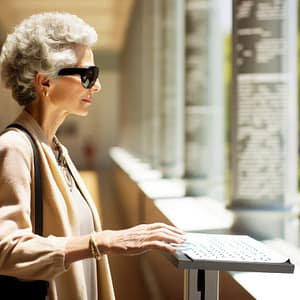
- Braille or tactile materials for visitors with visual impairments
- ASL-interpreted or captioned video content
By combining digital tools with universal design principles, institutions can ensure everyone enjoys an equitable experience.
Setting Standards and Staying Consistent
Consistency builds trust. Define clear guidelines at the start of a project, including:
- Which elements will be translated (titles, labels, panels, interactives)
- How languages will be displayed and formatted
- Tone, voice, and glossary terms to maintain uniformity across all translations
Work closely with your translation partner throughout the design process. Translation may reveal new insights—sometimes even prompting small refinements to the original text for greater clarity or inclusiveness.
Final Thoughts
Thoughtful integration of language, technology, and accessibility allows museums and other cultural institutions to design experiences that respond to real visitor needs. This flexible approach allows individuals to decide how, when, and in which language they engage. The result is a richer museum experience that reflects the diversity of the community your institution serves.